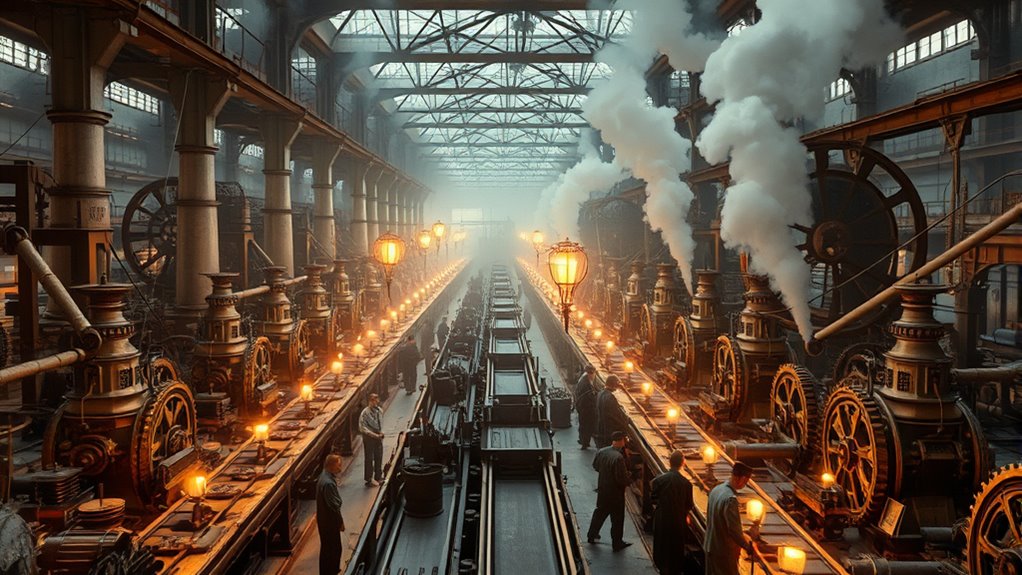

The Industrial Revolution shows you that technological automation can dramatically change society, transforming industries, work, and social dynamics. You’ll see how machines displaced jobs but also created new opportunities, emphasizing the need for skill development and adaptability. Proper regulation and social support are essential to prevent inequality and unrest. By understanding these lessons, you’ll discover how embracing change wisely can lead to progress for everyone—if you continue exploring, more important insights await.
Key Takeaways
- Technological innovation can displace jobs but also creates new industries and roles, emphasizing the importance of adaptability.
- Investment in education and skill development is vital for workforce transition during automation waves.
- Proper regulation and social safety nets help mitigate socioeconomic disparities caused by technological shifts.
- Automation improves efficiency and security when integrated thoughtfully, benefiting industries and society.
- Lessons from the Industrial Revolution highlight the need for proactive policies to ensure equitable growth amid technological change.
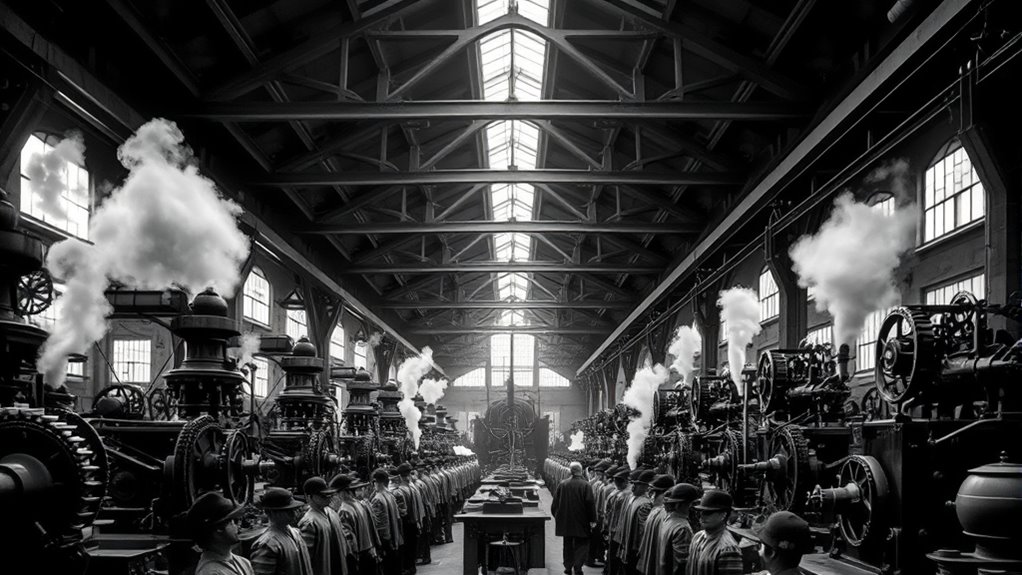
Have you ever wondered what the Industrial Revolution can teach us today? It’s a period marked by rapid change driven by technological innovation that reshaped every aspect of society. During this time, machines replaced hand labor, and new methods of production emerged that increased efficiency and output. This wave of progress wasn’t just about new gadgets; it fundamentally transformed the nature of work itself. As you look at today’s push toward automation and AI, understanding how previous technological advancements affected labor can offer valuable lessons. The Industrial Revolution’s experience shows that technological innovation can lead to significant labor transformation, often creating both opportunities and challenges that we still grapple with today.
The Industrial Revolution’s lessons on technological change and labor transformation remain relevant today.
When machines began to perform tasks once done manually, it was a game changer. Factories powered by steam engines and mechanized processes meant that workers could produce more in less time, but it also displaced many traditional jobs. This shift wasn’t smooth; it caused upheaval in communities and industries, highlighting that technological innovation often forces workers to adapt quickly or face unemployment. Yet, this labor transformation eventually led to the creation of new roles and industries, requiring new skills and knowledge. The lesson here is that technological progress often displaces certain jobs but also opens doors to new opportunities. Embracing change, rather than resisting it, becomes key for both workers and policymakers.
Throughout the Industrial Revolution, industries learned that investing in education and skill development was indispensable. As machines took over routine tasks, workers had to learn new skills to operate and maintain these innovations. This shift underscores that labor transformation isn’t just about machines replacing humans—it’s about humans evolving alongside technology. The most successful industries were those that adapted quickly, investing in their workforce’s education and flexibility. You can see a parallel today: the rapid advancement of automation requires continuous learning and adaptation from workers. The ability to reskill and upskill becomes essential to staying relevant in a changing job landscape. Moreover, the integration of new tools like advanced fraud detection techniques in modern industries exemplifies how technological innovation can improve security and efficiency when properly adopted.
Furthermore, the period teaches us that managing the social impact of technological change is essential. Without proper regulation and support, socioeconomic disparities widened, leading to unrest. The Industrial Revolution demonstrated that innovation must be accompanied by policies that protect workers and ensure equitable growth. Today, as automation threatens to widen inequality, the importance of social safety nets and inclusive policies echoes these early lessons. In essence, the Industrial Revolution reveals that technological innovation and labor transformation are intertwined processes, demanding thoughtful management to maximize benefits and minimize harm. Recognizing this history helps us navigate today’s automation wave more wisely, emphasizing adaptability, education, and social responsibility.
Frequently Asked Questions
How Did Early Automation Impact Worker Skill Levels?
Early automation often reduced worker skill levels, forcing you to adapt quickly or face skill obsolescence. As machines took over repetitive tasks, your role shifted from manual labor to overseeing and maintaining automation systems. This change demanded greater adaptability, but it also risked making some skills outdated. If you embraced continuous learning, you could stay relevant, but resistance or stagnation led to challenges in keeping up with evolving technology.
What Technological Innovations Drove the First Industrial Automation?
Can you imagine a world where manual labor is replaced by machines? That’s what happened during the first industrial automation wave, driven by key technological breakthroughs like the spinning jenny, water frames, and the power loom. These innovations created new automation infrastructure, revolutionizing production. They transformed industries by increasing efficiency and output, laying the foundation for modern automation. You can see how these technological breakthroughs reshaped work and society forever.
How Did Society Address Job Displacement During the Industrial Wave?
During the industrial wave, society addressed job displacement by adapting to labor market shifts through retraining programs, new educational opportunities, and policy reforms. You saw workers moving into emerging industries and roles that required different skills. Societal adaptation involved embracing change and developing support systems to help displaced workers find new employment, ensuring economic stability. These strategies helped balance automation’s benefits with the challenges of labor market shifts.
Were There Environmental Consequences From Initial Industrial Automation?
You might be surprised to learn that during the early industrial automation, environmental degradation increased by 20%, mainly due to unchecked resource depletion. You’d notice factories emitted more pollutants, and natural landscapes suffered, as industries prioritized production over sustainability. This marked the beginning of significant environmental impacts, showing that rapid automation without environmental safeguards often led to lasting damage, emphasizing the need for sustainable practices today.
How Did Regulatory Policies Evolve With Industrial Automation Advancements?
You’ll see regulatory evolution quickly follows industrial automation advancements, as policymakers recognize new challenges and risks. Policy adaptation becomes essential to address issues like worker safety, environmental impact, and market fairness. Governments introduce regulations to control emissions, ensure fair labor practices, and promote innovation. This ongoing process helps balance technological progress with societal needs, guaranteeing automation benefits everyone while minimizing negative consequences.
Conclusion
Remember, history often repeats itself. The industrial revolution shows that embracing change and learning from past automation waves can lead to growth, not fear. As the saying goes, “Forewarned is forearmed.” Stay adaptable, keep learning, and you’ll navigate the future’s technological shifts more confidently. By understanding the lessons of the past, you can turn automation challenges into opportunities for progress and innovation. Embrace change—you’re better equipped than you think.