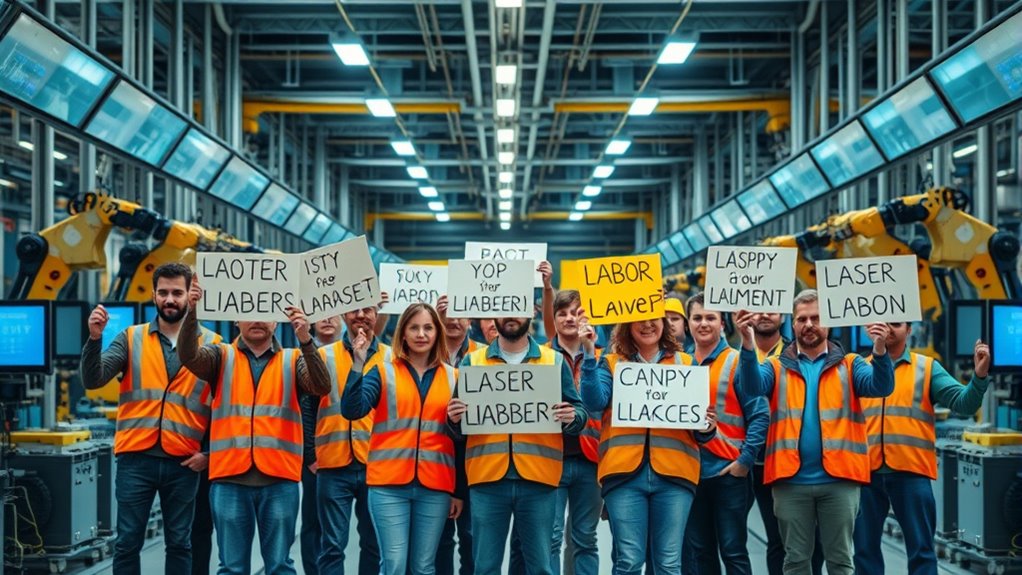

In this automation age, labor unions are shifting from resisting change to actively shaping it. You’ll see them advocating for fair automation policies, investing in worker education, and creating digital platforms for collective voice. They aim to build solidarity across sectors and ensure workers benefit from new technology. If you want to discover more about how unions are transforming to protect workers’ rights in this evolving landscape, keep exploring these strategies further.
Key Takeaways
- Shift from resistance to collaboration, advocating for transparent automation policies that protect workers’ rights and promote shared growth.
- Develop digital platforms and networks to unify workers, including gig and digital workers, for stronger collective bargaining.
- Invest in AI literacy and skills training to empower workers and facilitate smooth adaptation to technological changes.
- Lobby for legal frameworks that ensure fair wages, work hours, and protections against unjust dismissals related to automation.
- Reinforce the union’s role as a strategic partner in technological change, fostering solidarity and equitable distribution of automation benefits.

Have you ever wondered how labor unions are adapting to the rapid rise of automation? As AI integration becomes more prevalent in workplaces, unions are shifting their strategies to protect workers’ rights and guarantee they remain relevant. Instead of resisting technology outright, many unions focus on engaging with AI advancements to advocate for fair implementation and job security. They’re pushing for policies that require companies to involve workers in decisions about automation, emphasizing transparency and collaboration rather than confrontation. This approach helps prevent layoffs and encourages companies to view automation as a tool for growth rather than a threat to employment.
A key part of this adaptation involves fostering worker solidarity in new ways. With AI changing the nature of jobs, unions are creating platforms for collective bargaining that include digital workers and gig economy participants. They’re establishing networks where workers can share information, voice concerns, and coordinate actions more efficiently. By strengthening worker solidarity across different sectors and job types, unions aim to build a united front that’s better equipped to negotiate with employers over AI-driven changes. They recognize that technological shifts can fragment the workforce, so fostering a sense of community and shared purpose becomes essential.
Union leaders are also investing in education and training programs focused on AI literacy. They understand that equipping workers with the skills to operate new systems and adapt to evolving job requirements is vital. These programs not only empower workers but also demonstrate that unions are proactive partners in steering digital transformation. This proactive stance helps build trust and shows that unions are committed to securing workers’ futures in an automated world.
Furthermore, unions are advocating for legal frameworks that regulate AI deployment and protect worker rights. They’re lobbying for policies that mandate fair compensation, reasonable work hours, and protections against unfair dismissals when automation is introduced. By participating in policy discussions and partnering with tech experts, unions aim to shape an environment where AI enhances productivity without sacrificing workers’ dignity or livelihoods.
In essence, unions are transforming their role from adversaries of automation to champions of worker rights within a new technological landscape. They’re leveraging AI integration as an opportunity to reinforce worker solidarity, promote fair practices, and guarantee that the benefits of automation are shared broadly. They’re also emphasizing the importance of high refresh rates to ensure responsive and smooth interactions in digital environments, which can be crucial as work becomes more digitally interconnected. It’s a dynamic shift—one that requires agility, strategic thinking, and a firm commitment to protecting the dignity of every worker in an era of rapid technological change.
Frequently Asked Questions
How Can Unions Effectively Advocate for Gig Economy Workers?
You can effectively advocate for gig economy workers by leveraging digital organizing to connect and mobilize them quickly. Use online platforms to share information and build solidarity. Additionally, push for collective bargaining rights to negotiate better pay and conditions. By combining digital tools with strategic advocacy, you help gig workers gain a stronger voice and ensure their needs are met in the evolving labor landscape.
What Policies Support Workers Displaced by Automation?
Think of policies like a safety net catching you when you fall. Universal Basic Income provides financial stability for displaced workers, easing the shift. Simultaneously, Job Retraining programs equip you with new skills, opening doors to fresh opportunities. Supporting these policies guarantees you’re not left behind as automation transforms industries, giving you the tools and security to adapt and thrive in a changing job landscape.
How Do International Labor Standards Adapt to Automation?
You should focus on strengthening global compliance and updating ethical standards to adapt to automation. International labor standards evolve by incorporating new technology considerations, ensuring fair treatment, and protecting workers’ rights across borders. By advocating for consistent enforcement and collaborative standards, you help promote equitable practices worldwide, ensuring automation benefits everyone without undermining fundamental labor rights. This approach fosters a fair, resilient workforce capable of steering through rapid technological changes.
Can Unions Influence Government Automation Regulations?
Think of unions as the steering wheel guiding the ship through turbulent waters. You can influence government automation regulations by actively engaging in legislative lobbying and advocating for policies that protect workers amid robotic integration. Your efforts can shape laws to guarantee automation benefits everyone, not just corporations. By voicing your concerns and collaborating with policymakers, you help steer the future of automation toward a fairer, more inclusive direction.
What Role Does Technology Play in Union Organizing Efforts?
Technology plays a vital role in your union organizing efforts by enabling digital organizing and AI-driven campaigns. These tools help you reach workers more efficiently, analyze data to identify key supporters, and craft targeted messages. By leveraging digital platforms and AI, you can mobilize members faster, foster stronger communication, and expand your outreach beyond traditional methods, making your advocacy more effective in today’s automated workplace environment.
Conclusion
Just as David faced Goliath with ingenuity, today’s unions must innovate to meet automation’s challenges. Embrace new strategies, harness technology, and unite with purpose, for the fight for workers’ rights is timeless. Remember, every era’s giants can be toppled when you stand together, resilient and adaptable. The future belongs to those who refuse to be silenced—your collective voice is the ultimate weapon in shaping a fair, equitable workplace.