📊 Full opportunity report: AI Report Generators For Private Investigator Reporting on IdeaNavigator AI — validation score, market gap, and execution plan.

Get business pricing on tech for your team
- Business-only prices and quantity discounts
- Tax-exempt purchasing
- Multiple users, one account, clear invoices
TL;DR
IdeaNavigator AI has outlined a proposed AI report generator for independent private investigators and small firms. The concept would turn field notes, timestamped photos and GPS tracks into chronological reports, but it is a product idea, not a reported launch or validated tool. Its proposed test would measure time saved and have attorneys review report quality.
IdeaNavigator AI has proposed testing an AI report generator for independent private investigators and small firms, designed to assemble field notes, timestamped photos and GPS tracks into chronological case reports. The proposal matters because it targets hours of report writing after surveillance work, but it describes a product opportunity and test plan—not a launched service or evidence that automated reports meet courtroom requirements.
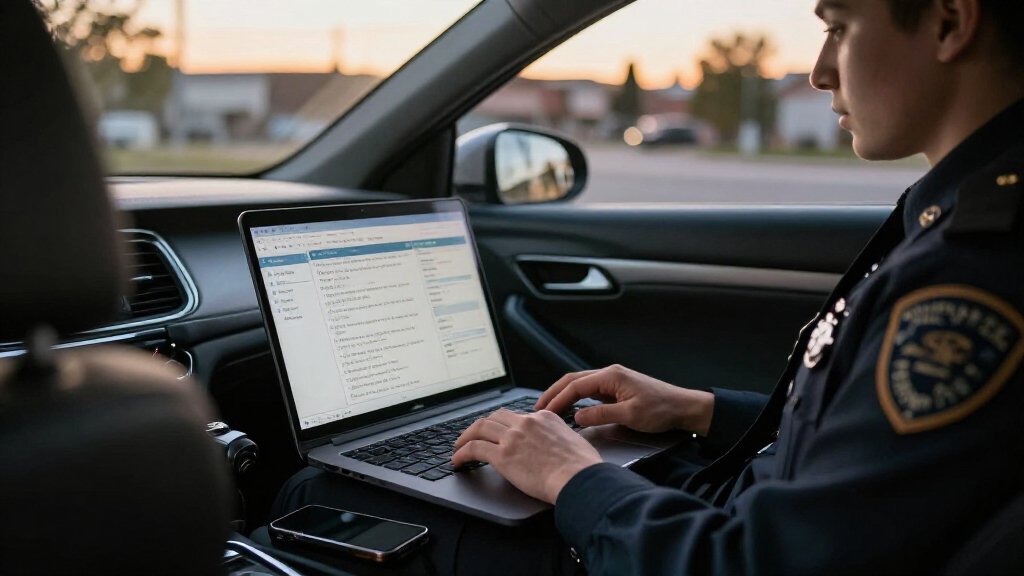
The proposed system would take in investigators’ field notes, timestamped photographs and GPS tracks, then arrange observations in chronological order. It would add references to exhibits, flag gaps in a timeline and export a draft using the firm’s own report template. A human review pass is part of the proposed workflow.
IdeaNavigator AI identifies the intended customers as independent investigators and small investigation firms. Its stated problem is that surveillance days can leave investigators with hours of report writing that may not be billed separately. The proposal also says report quality can affect whether investigative work is usable in court; that is a rationale for the product, not a demonstrated finding about any particular tool.
The suggested business model is a monthly subscription priced per seat, with tiers based on report volume. To test demand and performance, the proposal recommends converting recent case files from ten firms into reports, asking their attorneys to assess admissibility-related quality, and measuring time saved for each report. No results from such a test are included.
Investigation technology · Product proposal
AI Report Generators for Private Investigator Reporting
IdeaNavigator AI outlines a proposed workflow that could turn field notes, timestamped photos, and GPS tracks into chronological case report drafts. It is an untested product idea, not a reported launch or validated tool.
01 / Proposed workflow
From field records to a draft
The concept combines common surveillance materials into one ordered narrative, with investigators reviewing the result before use.
Inputs
Capture the record
Bring together investigator field notes, timestamped photographs, and GPS tracks from an assignment.
Organization
Build a timeline
Arrange observations chronologically, reference supporting exhibits, and flag gaps in the sequence.
Output
Review and export
Create a draft in the firm’s report template, then have an investigator check the facts and wording.
02 / Traceability
A human-reviewed chain
Each stage needs to preserve the connection between a statement and the evidence behind it.
Collect
Notes, photos, GPS records
Order
Place events in time sequence
Flag
Surface gaps and exhibit links
Draft
Format in the firm’s template
Verify
Investigator reviews the report
03 / What the proposal establishes
Opportunity is not proof
The stated business case and possible benefits are proposals. They do not establish product performance or legal acceptance.
Less time spent drafting
The concept addresses hours of report writing that may follow surveillance and may not be billed separately.
Consistent ordering and exhibit references could help organize documentation if the system handles the source material accurately.
Reliability for legal use
No attorney assessments, measured time savings, or court outcomes are reported. Admissibility in any case has not been established.
Details on conflicting timestamps, incorrect location data, sensitive records, and how the system avoids turning inference into fact remain unspecified.
04 / Suggested evaluation
A ten-firm trial is proposed
The proposal suggests a limited test to evaluate drafting efficiency separately from report quality.
Suggested trial size
- 01Convert recent case files into draft reports using the proposed workflow. Firm participation is not confirmed.
- 02Ask attorneys to assess report quality related to intended legal use. No reviews are available yet.
- 03Measure time per report and document errors, missing details, and investigator edits.
05 / Reader checklist
Questions still open
These answers define what is known today—and where the proposal needs evidence.
Has a product launched?
No launch is announced, and no product developer or release schedule is identified.
Would reports be admissible?
That is unknown. The proposal suggests attorney review but provides no reviews or court outcomes.
What business model is suggested?
A monthly subscription priced per seat, with tiers based on report volume. No prices or confirmed offer are provided.
Has the trial begun?
No timetable or participation commitments are reported, and no test results are included.
Testing Time Savings and Courtroom Quality
The proposal focuses on a consequential part of investigative work: turning observations collected in the field into a clear, organized record. If software can reliably arrange notes and supporting materials, it could reduce the time investigators spend drafting reports and help firms handle documentation more consistently. Those benefits remain potential outcomes, not established results.
For readers considering such software, the central issue is not simply whether AI can produce fluent prose. A report may need to preserve the relationship between each statement and its underlying evidence, accurately represent when and where observations occurred, and make missing information visible. The proposed features—exhibit references, timeline-gap flags and investigator review—address some of those concerns, but the proposal does not specify how the system would verify facts or prevent errors.
The proposed attorney review and time measurement offer a way to test two separate questions: whether the drafts save investigators work, and whether legal reviewers consider their quality suitable for the intended use. Neither a shorter drafting process nor a polished format alone would establish that a report is admissible in a particular case.
Products Worth Considering

Apple Watch SE 3 GPS 44mm Smartwatch

DJI Osmo Pocket 3 Creator Combo Vlogging Camera with 1 CMOS & 4K/120fps

DJI Mic 3 Wireless Microphone System (2 Transmitters, 1 Receiver, Charging Case)
As an affiliate, we earn on qualifying purchases.
From Surveillance Notes to Draft Reports
The concept sits within investigation services software and addresses a narrow workflow rather than proposing a general-purpose writing assistant. Investigators may collect information in different forms during a surveillance assignment; the suggested tool would bring those records together in a single chronological draft.
IdeaNavigator AI frames the opportunity around the view that large language models can transform structured observations into formal narrative and that private investigators are underserved by modern software. Those points are part of the proposal’s market rationale. It provides no market-size figures, survey findings, customer interviews or comparative product analysis to establish demand or the state of existing options.
The suggested first step is deliberately limited: try the workflow with ten firms’ recent case files, rather than assume broad adoption. That approach would let firms and their attorneys assess actual draft quality and compare report-writing time with their current process. The proposal does not say whether those firms have agreed to participate.
No Product or Test Results Yet
The proposal does not identify a released product, developer, launch schedule or participating firms. It also provides no measured time savings, attorney assessments, pricing figures or evidence that generated reports have been accepted in court. The suggested subscription structure is a business-model concept, not a confirmed offer.
Other practical details remain unspecified, including how a system would handle conflicting timestamps, incomplete notes, incorrect location data, sensitive case records and corrections made by investigators. It is also unclear what safeguards would keep generated wording from presenting an inference as a directly observed fact. Those questions would need answers in product testing, especially because the proposal itself identifies report quality as important to legal use.
A Ten-Firm Trial Is Proposed
The next step described by IdeaNavigator AI is a trial using recent files from ten investigation firms. Investigators would use the proposed inputs to produce draft reports, while attorneys review their quality and the firms track time spent per report. The proposal does not give a timetable or confirm that the trial has begun.
If conducted, a useful account of the results would need to distinguish time saved from report quality and document how errors, missing information and human edits were handled. Until those findings—or details of an actual product—are available, the concept should be understood as an untested workflow proposal, not a proven way to prepare courtroom-ready reports.
Source: IdeaNavigator AI
Key Questions
Has an AI report generator for private investigators launched?
The proposal describes a product opportunity and a suggested minimum viable product. It does not announce a launched service or name a product developer.
What information would the proposed tool use?
It would take in field notes, timestamped photos and GPS tracks and assemble them into a chronological report with exhibit references. The proposal also calls for timeline-gap flags and export to a firm’s template.
Would AI-generated reports be admissible in court?
That has not been established. The proposed test would ask attorneys to review report quality related to admissibility, but no reviews or court outcomes are reported.
How would the proposal test whether the tool works?
IdeaNavigator AI suggests using recent case files from ten firms, having their attorneys assess the resulting reports and measuring time saved per report. No trial results or participation commitments are provided.
Source: IdeaNavigator AI