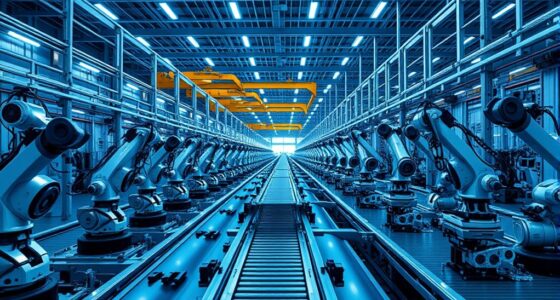
In a post-work world driven by automation, your focus shifts from what people will do to who owns the outputs created by machines and algorithms. As technology replaces tasks, questions about ownership, responsibility, and fairness become more pressing. It’s no longer just about creating—it’s about controlling rights and ethical considerations behind automated content. If you want to understand how these issues influence society and your future, there’s much more worth exploring.
Key Takeaways
- The focus shifts from human labor to determining ownership rights over automated and AI-generated outputs.
- Ownership questions arise based on control, contribution, and the role of human collaborators in machine-produced work.
- Ethical concerns involve accountability, fairness, and the distribution of benefits from automated creations.
- Legal frameworks must adapt to define rights and responsibilities for AI-generated content.
- Recognizing the evolving nature of creativity and ownership is essential in a post-work society.
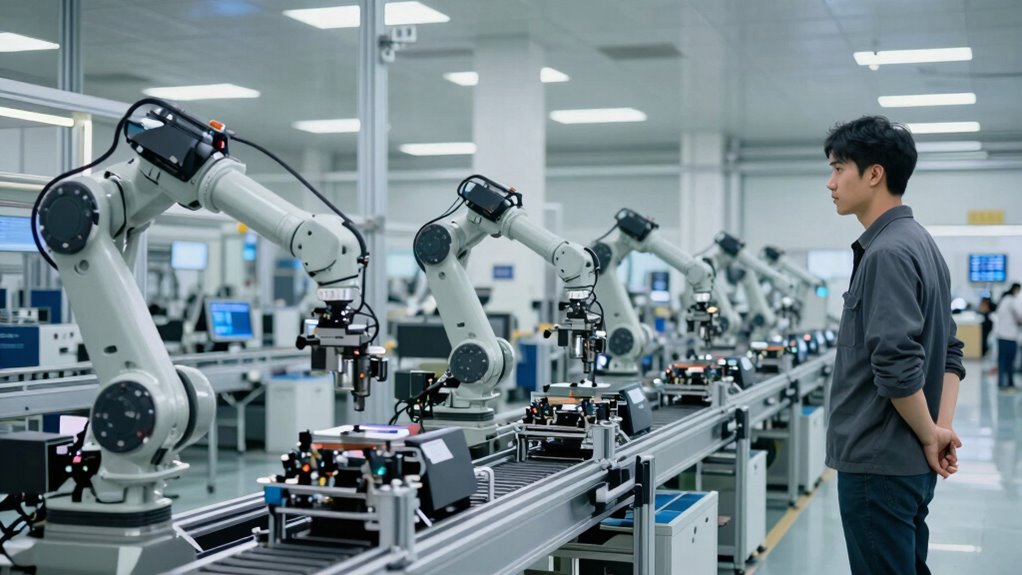
Have you ever stopped to wonder what truly comes next after you clock out? It’s a question that’s becoming more urgent as automation reshapes the way we work. When machines and algorithms take on tasks once done by humans, it shifts the conversation from “what will people do?” to “who owns the output?” This isn’t just about productivity; it’s about the ethics behind automation and how creative ownership is defined in a world where technology is increasingly the primary creator.
Automation ethics play a central role here. As AI and automation tools generate content, solve problems, or even make decisions, questions arise about responsibility and fairness. Who’s accountable when a machine makes a mistake? Who benefits from the work it produces? These are tough dilemmas because automation blurs the lines of accountability. It’s tempting to see automation as purely beneficial, but you need to consider the moral implications. Do you have the right to claim the outputs of a machine as your own? And is it ethical to let algorithms determine creative or critical tasks that traditionally belonged to humans? These questions challenge long-held notions of fairness and ownership, forcing you to think about the broader impact on society.
Automation raises ethical questions about accountability, ownership, and fairness in a world where machines increasingly make decisions.
At the heart of this debate is the concept of creative ownership. When you create something—whether it’s a piece of art, a report, or a solution to a complex problem—you usually hold rights over that output. But what happens when an AI or automated system produces similar work? Does the human who programmed the system automatically own the results? Or does the ownership shift to whoever controls the technology? These questions aren’t just legal—they’re deeply philosophical. As automation becomes more sophisticated, the lines of ownership become fuzzier, pushing you to reconsider what it means to be a creator in the digital age. Recognizing the importance of ethical considerations in automation can help guide responsible decision-making and policy development.
You may find yourself grappling with whether you should even claim ownership, especially when the machine’s output is a collaborative effort. It’s no longer just about individual effort but about the interplay between human ingenuity and machine intelligence. The debate extends beyond law into ethics, culture, and even identity. If a machine creates a masterpiece or solves a problem, who truly deserves recognition? As automation advances, you’ll need to stay informed and thoughtful about these issues, recognizing that the post-work world isn’t solely about employment but about redefining ownership and responsibility in a rapidly changing landscape. Additionally, understanding the role of biodiversity in technology and innovation can offer new perspectives on sustainable and ethical development in this evolving environment.
As an affiliate, we earn on qualifying purchases.
Frequently Asked Questions
How Will Ownership Rights Be Determined in Automated Industries?
You’ll see ownership rights in automated industries hinge on intellectual property laws and creative ownership agreements. When machines generate output, legal frameworks will determine who holds rights—be it the creator, owner, or developer of the AI. Clear contracts and understanding of intellectual property rights are essential, as they define who can monetize and control the output. This guarantees proper recognition of creative ownership in a rapidly evolving technological landscape.
What Legal Frameworks Will Govern Ai-Generated Work?
You’ll find that legal frameworks for AI-generated work focus on intellectual property and creative attribution. Laws are evolving to determine whether the creator, user, or AI itself holds rights. As AI blurs traditional boundaries, courts may emphasize authorship and originality, ensuring fair attribution. You should stay informed about these changes, as they’ll shape your rights to AI-produced content and influence future innovation and ownership.
How Will Income Distribution Change With AI and Automation?
As AI and automation advance, you’ll likely see income distribution shift towards wider wealth redistribution efforts, like Universal Basic Income. This approach helps support those displaced by technology, ensuring economic stability. Governments may implement policies to rebalance wealth, reducing inequality. You might also see new opportunities for shared ownership, where profits from AI are redistributed, fostering a fairer economy that benefits everyone rather than a few.
What Role Will Governments Play in Post-Work Economies?
Governments will step up as the gatekeepers of digital sovereignty, ensuring fair distribution of resources like Universal Basic Income. You’ll see policies that protect citizens’ rights amid automation, acting as a safety net and a way to keep the wheels turning. They’ll also regulate AI and digital assets, making sure technology benefits everyone, not just a select few. It’s a balancing act, but one that’s essential for a fair post-work economy.
How Can Individuals Retain Control Over Their Creative Outputs?
You can retain control over your creative outputs by actively engaging in creative collaboration and understanding intellectual property rights. Protect your work through copyrights or patents, and stay informed about legal frameworks. Collaborate with others while clearly defining ownership terms upfront. By asserting your rights and sharing knowledge, you guarantee your creations remain under your control, even as technology and collaborations evolve in a post-work economy.
automated content creation tools
As an affiliate, we earn on qualifying purchases.
As an affiliate, we earn on qualifying purchases.
Conclusion
So, as you ponder the future of work, remember this: it’s not just about what you’ll do, but who claims the creations you make. The true question remains hidden beneath the surface—who owns the output when machines and humans collaborate? The answer could reshape everything you know about effort, value, and identity. Are you prepared for a world where the lines blur? Because, in the end, the most profound ownership might be the one you least expect.

The Ethical Nightmare Challenge: How to Avoid the Worst of AI
As an affiliate, we earn on qualifying purchases.
As an affiliate, we earn on qualifying purchases.
ownership rights for AI-generated art
As an affiliate, we earn on qualifying purchases.
As an affiliate, we earn on qualifying purchases.