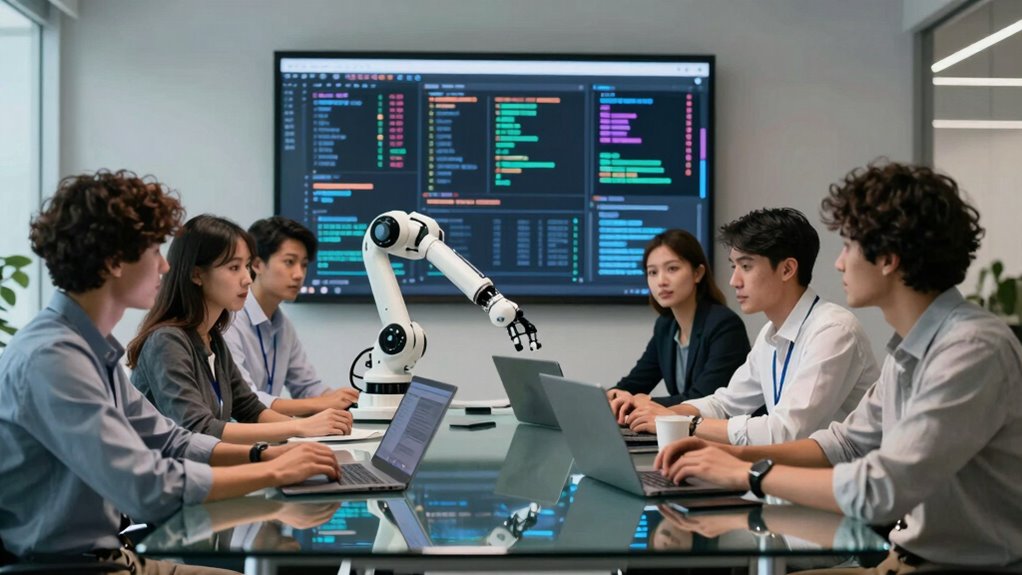
AI is gradually transforming work, focusing on task efficiency rather than rapid overhaul. You’ll find routine tasks like data entry handled by AI, freeing you to tackle complex problem-solving and strategic work. Staying ahead means developing skills that complement AI, such as critical thinking and emotional intelligence. Recognizing AI’s limits helps you adapt workflows effectively, making changes at a manageable pace. Keep exploring to discover how ongoing updates can position you for future success.

Get business pricing on tech for your team
- Business-only prices and quantity discounts
- Tax-exempt purchasing
- Multiple users, one account, clear invoices
Key Takeaways
- AI enhances efficiency by automating routine tasks but still relies on human judgment for complex problem-solving.
- Technological change is gradual, allowing workers to adapt skills and workflows over time.
- Ongoing learning and skill development are essential to stay relevant amidst evolving AI capabilities.
- AI’s limitations mean it complements rather than replaces human expertise, emphasizing collaboration.
- The pace of AI-driven work changes is steady, not as rapid or dramatic as some predictions suggest.
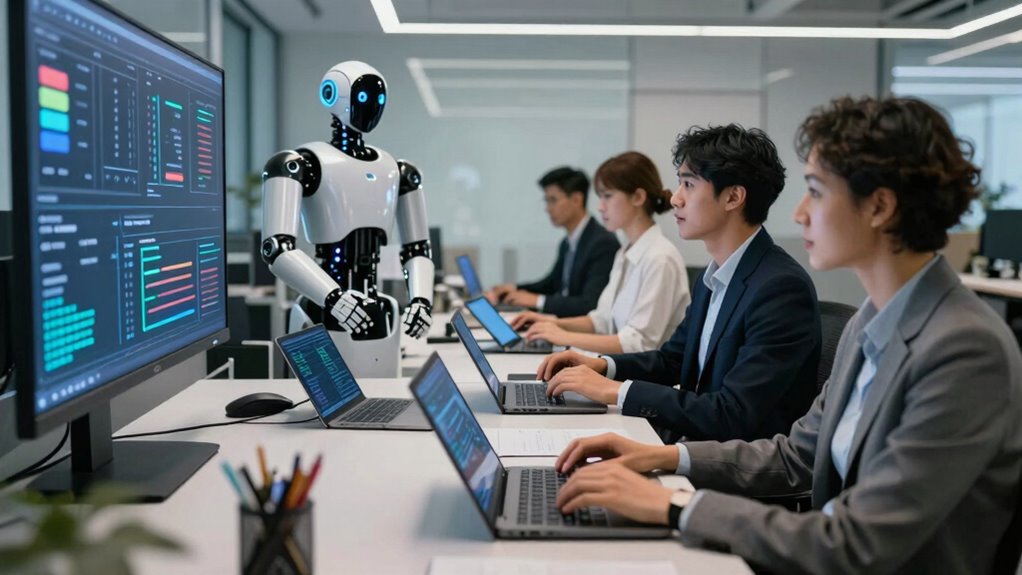
AI’s role in automation integration is often misunderstood. It’s not about replacing jobs outright but about making certain tasks more efficient. For example, routine data entry or simple customer queries may soon be handled by AI tools, but complex problem-solving still requires human judgment. As AI becomes part of your workflow, you’ll find yourself working alongside it, leveraging its capabilities to streamline your tasks. This integration can free you up to focus on higher-level, strategic activities, but only if you’re ready to shift your skill set accordingly. Recognizing AI’s gradual impact helps in setting realistic expectations and avoiding unnecessary anxiety about rapid disruption.
AI enhances efficiency by handling routine tasks, allowing humans to focus on strategic, complex problem-solving and judgment.
Skill adaptation becomes your best strategy in this evolving landscape. Instead of waiting for AI to do everything, you should proactively develop skills that complement the technology. Critical thinking, emotional intelligence, and complex problem-solving are areas where human expertise remains essential. You’ll also need to learn how to work with new tools—understanding their limitations and strengths. This ongoing learning process isn’t a one-time event but a continuous effort to stay relevant as AI tools grow more sophisticated. Additionally, understanding AI’s limitations is crucial for leveraging its benefits effectively. Recognizing the pace of technological change can help you set realistic expectations and prepare for ongoing adjustments in your role. Staying informed about emerging AI capabilities can give you a competitive edge in adapting your workflows. Moreover, embracing a mindset of continuous learning will be vital to keep up with rapidly evolving technology.
The pace of change might not be as breathtaking as some forecasts claim, but that doesn’t mean you can be complacent. Staying adaptable means embracing new workflows, learning new skills, and understanding how AI fits into your role. Instead of fearing automation, see it as an opportunity to upgrade your capabilities. Employers are increasingly valuing workers who can integrate AI tools seamlessly, making themselves more productive and valuable. Your ability to skillfully adapt to these shifts will determine how well you thrive in this new era of work.
Frequently Asked Questions
How Are Small Businesses Adapting to AI Integration?
You’re likely adopting AI-driven marketing tools to target customers more effectively and increase sales. Small businesses also implement automated customer service to handle inquiries efficiently, freeing up your time for other tasks. By integrating these AI solutions gradually, you stay competitive without overwhelming your resources. This approach helps you improve customer engagement and streamline operations, all while managing costs and adapting to evolving technology at a manageable pace.
What Skills Will Be Most Valuable in an Ai-Driven Workplace?
You’ll find that skills in AI collaboration and skill evolution become most valuable in an AI-driven workplace. You need to work effectively alongside AI tools, understanding their capabilities and limitations. As technology advances, continuously updating your skills guarantees you stay relevant, adapt to new processes, and contribute meaningfully. Embracing lifelong learning and developing soft skills like creativity and problem-solving will set you apart in this evolving environment.
How Does AI Impact Employee Job Security?
You might think AI guarantees job security, but ironically, it often leads to job displacement. While some roles become obsolete, you’ll find opportunities in employee retraining, adapting your skills to new tasks AI can’t handle. Instead of fearing job loss, embrace continuous learning. By staying flexible and upgrading your skills, you can turn AI’s impact into a chance for growth, not a threat to your livelihood.
Are There Ethical Concerns With AI Replacing Human Roles?
Yes, there are ethical concerns with AI replacing human roles. You should consider AI ethics, ensuring that AI systems are fair, transparent, and respect privacy. Human oversight remains essential to prevent biases and errors, maintaining accountability. You must balance technological advancement with ethical responsibilities, making sure AI enhances human work rather than simply replacing it. Addressing these concerns helps create a trustworthy environment where AI benefits everyone without compromising ethical standards.
How Long Will It Take for AI to Fully Transform Industries?
You’ll see AI gradually transform industries over the next decade, but full adoption depends on AI regulation and addressing ethical considerations. It’s not a rapid shift; instead, it’s steady, requiring careful implementation to avoid unintended consequences. As companies prioritize responsible AI use, your industry’s change will be shaped by how well regulators and organizations manage these issues, making the timeline more about thoughtful progress than quick transformation.
Conclusion
So, while AI isn’t transforming your workday overnight like some hype suggests, it’s steadily carving out new paths. Think of it as a slow-burning fire rather than a lightning strike—gradually warming the room and reshaping the landscape. Patience is your best ally here; change may be subtle now, but over time, AI’s quiet influence will reshape your work world in ways you’re only beginning to see.
Fall Picks
fall essentials
As an affiliate, we earn on qualifying purchases.