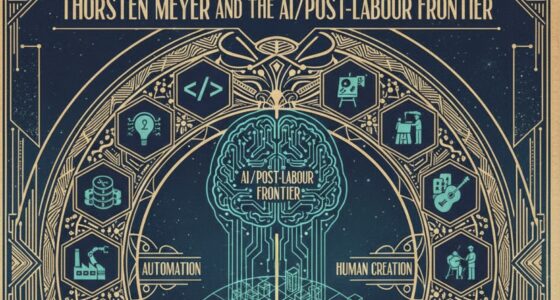

Most companies are still far from achieving fully autonomous workflows. While headlines highlight breakthroughs, real integration is challenging and often slow. You’ll find many struggle with legacy systems, poor data infrastructure, and resistance from employees. Building a seamless AI-human collaboration takes time, effort, and a cultural shift. If you want to understand what’s holding organizations back and how they can move forward, there’s more to uncover below.

Get business pricing on tech for your team
- Business-only prices and quantity discounts
- Tax-exempt purchasing
- Multiple users, one account, clear invoices
Key Takeaways
- Many companies face significant barriers like legacy systems and poor data infrastructure, hindering AI integration.
- Resistance from employees and organizational inertia slow down progress toward autonomous workflows.
- Effective AI implementation requires a fundamental shift in processes and culture, not just new tools.
- Full autonomy demands ongoing training, change management, and gradual refinement, which most organizations have yet to achieve.
- Seamless human-AI collaboration remains a challenge, preventing the realization of fully autonomous workflows.

Despite the buzz around automation and AI transforming workplaces, most companies are still far from achieving truly autonomous workflows. While headlines highlight breakthrough technologies, the reality is that many organizations struggle to integrate AI seamlessly into their existing processes. AI integration isn’t just about adding new tools; it requires a fundamental shift in how work gets done. You need systems that communicate effectively, adapt to new inputs, and support decision-making without constant human oversight. Unfortunately, many companies face hurdles, such as incompatible legacy systems, inadequate data infrastructure, and resistance to change, which slow down or complicate the integration process.
Even when AI tools are implemented, their success hinges heavily on employee adaptability. You, as an employee, must learn to work alongside these new technologies, adjusting your routines and mindsets. This isn’t always straightforward. Resistance to change, fear of job displacement, or simply a lack of training can hinder your ability to leverage AI effectively. Companies often underestimate the importance of fostering a culture that embraces innovation, leaving employees unprepared for the shift. Without proper training and support, AI remains a tool on the sidelines rather than a core part of daily operations. Additionally, data infrastructure plays a critical role in enabling this transition smoothly. Building a robust data infrastructure is essential for supporting the complex integrations required for true automation. Establishing effective data management practices is vital for AI success, as it directly impacts the quality and reliability of automated decisions.
Achieving autonomous workflows isn’t just about deploying AI; it’s about creating an ecosystem where human workers and intelligent systems collaborate seamlessly. You need clear processes that allow AI to take on routine tasks, freeing up your time for more strategic, complex work. But for that to happen, organizations must invest in developing employee skills and confidence in using new technologies. This means ongoing training programs, open communication, and a focus on change management. If employees aren’t adaptable or willing to learn, AI integration stalls, and workflows remain manual and inefficient. Furthermore, integrating AI with existing systems is often a complex undertaking that requires careful planning and execution.
Furthermore, the journey toward autonomy demands patience and persistence. It’s a gradual process, often involving trial and error, to find the right balance of human oversight and machine autonomy. You must stay flexible, open to feedback, and ready to refine processes over time. Only then can companies move closer to fully autonomous workflows, where AI and human effort complement each other effectively. Until organizations prioritize robust AI integration and cultivate employee adaptability, true autonomy remains a distant goal, not an immediate reality.
enterprise data infrastructure tools
As an affiliate, we earn on qualifying purchases.
As an affiliate, we earn on qualifying purchases.
Frequently Asked Questions
What Industries Are Closest to Implementing Autonomous Workflows?
You’ll find the manufacturing and logistics industries closest to implementing autonomous workflows. They’re actively integrating AI and automation to streamline operations and boost efficiency. This AI integration drives workforce transformation, reducing manual tasks and increasing precision. As these sectors adopt more autonomous processes, they set the pace for other industries, demonstrating how automation can revolutionize workflows and improve productivity across the board.
How Long Will Full Automation Take for Most Companies?
Full automation for most companies could take a decade or more, depending on how quickly they implement AI integration and adapt their workforce. You’ll need to invest in new technology and training, which takes time. As AI advances, you’ll see faster adoption, but the shift still requires careful planning. Your company’s readiness and willingness to change will influence how soon full automation becomes a reality.
What Are the Main Barriers to Achieving Autonomous Workflows?
You face massive barriers to autonomous workflows, like AI integration that feels more like decoding alien technology, and change management that’s like trying to move mountains. Resistance from teams, outdated systems, and fear of job loss slow progress to a crawl. Overcoming these hurdles demands bold leadership, clear communication, and relentless innovation. Without tackling these obstacles head-on, full automation remains a distant dream, no matter how much you wish it weren’t.
How Can Small Businesses Start Adopting Autonomous Processes?
You can start adopting autonomous processes by focusing on employee training to build confidence and skills in new technologies. Implement change management strategies to ease shifts, ensuring staff understand the benefits and feel supported. Begin with small, manageable automation projects that demonstrate value. As you progress, gather feedback, adapt your approach, and expand automation gradually, fostering a culture that embraces continuous improvement and innovation.
What Are the Cybersecurity Risks of Autonomous Workflows?
You face cybersecurity risks like data privacy breaches and insider threats with autonomous workflows. As processes become more automated, sensitive data might be exposed or mishandled without proper safeguards. Insider threats can exploit vulnerabilities, leading to data leaks or system manipulation. To mitigate these risks, you should implement strict access controls, continuous monitoring, and robust security protocols, ensuring your autonomous systems protect sensitive information and reduce potential security breaches.
As an affiliate, we earn on qualifying purchases.
Conclusion
Despite the buzz around autonomous workflows, most companies are still far from fully implementing them. Only about 15% have achieved significant automation, highlighting the gap between aspiration and reality. You should recognize that embracing true autonomy requires more than just technology; it demands a cultural shift and strategic investment. By understanding this, you can better prepare to lead your organization toward meaningful automation, rather than just chasing the latest trends.
employee training for AI integration
As an affiliate, we earn on qualifying purchases.
As an affiliate, we earn on qualifying purchases.
legacy system integration solutions
As an affiliate, we earn on qualifying purchases.
As an affiliate, we earn on qualifying purchases.
Halloween Picks
halloween
As an affiliate, we earn on qualifying purchases.