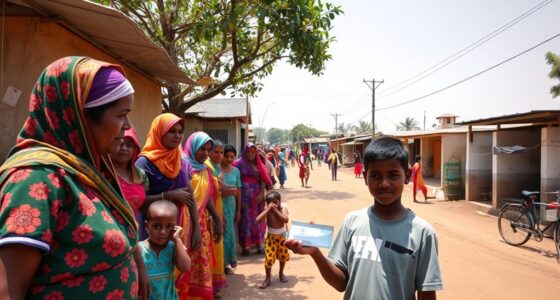

Basic income debates often overlook the immediate, personal challenges households face daily, focusing instead on broad economic benefits and cost savings. You might get a sense that cash alone can fix complex issues like childcare, housing, or job stability, but those needs are deeper than just money. Without understanding the full costs households face, policies risk being ineffective or only temporary fixes. If you want to see how these factors influence household well-being, keep exploring these essential differences.

Get tech for your team delivered free — and shop member deals
- Fast, free delivery on millions of items
- Access to Prime Big Deal Days deals on October 6–7
- Prime Video, Amazon Music and more included
Key Takeaways
- Debates focus on macroeconomic benefits, overlooking immediate household challenges like childcare and daily expenses.
- Basic income alone doesn’t address complex household costs such as housing, healthcare, and transportation.
- Policy discussions often neglect caregiving responsibilities, which significantly impact household financial stability.
- Income support without pathways to employment, education, or affordable housing fails to ensure long-term independence.
- A holistic approach is needed, as household realities involve interconnected expenses beyond just income levels.
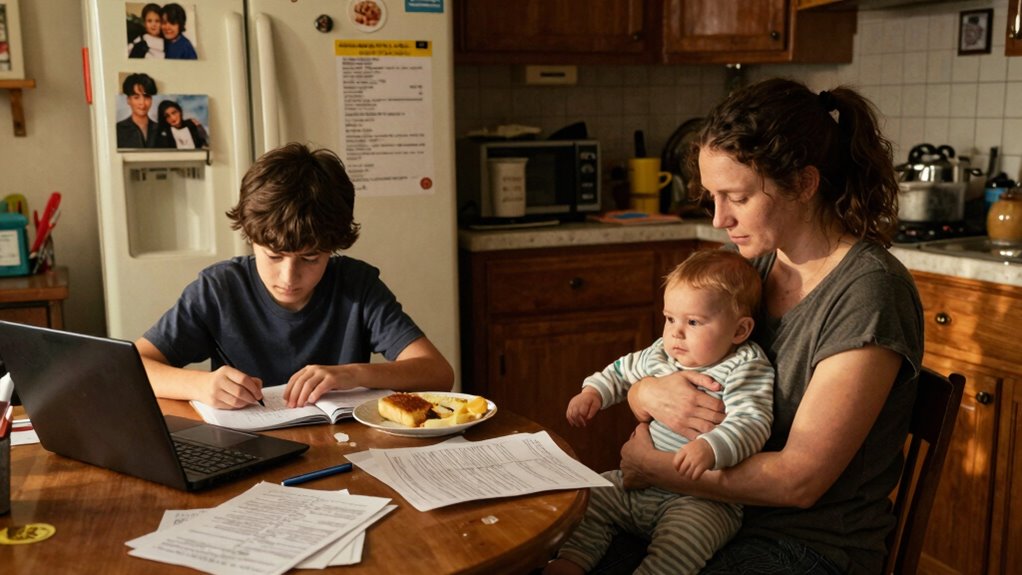
The debate over basic income often centers on its potential to reduce poverty and simplify welfare systems, but understanding its impact requires looking beyond policy proposals to the realities faced by households. When policymakers discuss giving everyone a regular cash payment, they tend to focus on broad economic benefits or cost savings. Yet, for many households, the immediate concerns are much more personal and immediate. You might wonder how a universal payment will help with day-to-day challenges like childcare support or achieving financial independence, especially in households where every dollar counts.
For families with children, childcare support is a critical issue. Basic income could provide some relief, allowing parents to better afford quality care without sacrificing other essentials. But simply handing out money doesn’t automatically address the complex realities of childcare. For example, if the income isn’t targeted or flexible enough, it might not close gaps for families with high childcare costs or those relying on unpaid care. You may find that without specific policies aimed at childcare, the basic income becomes a band-aid rather than a solution. Households need support systems that recognize the real costs and caregiving responsibilities they face, not just a blanket cash payment.
Basic income alone may not address the complex realities of childcare costs and responsibilities.
Financial independence is another key factor often overlooked in debates. While a steady income might seem like a straightforward way to empower individuals, it doesn’t guarantee independence if other barriers remain. For example, if you’re trying to escape a cycle of low-paying jobs or unstable employment, a basic income can help stabilize your financial situation temporarily. But without access to education, affordable housing, or job training, the income alone might not be enough to create true independence. The conversation should extend beyond the cash transfer to include support that helps you build skills, secure housing, or start a small business. Understanding the household economy and the interconnected factors that influence financial stability is crucial for designing effective policies. Additionally, addressing structural barriers can significantly enhance the effectiveness of income supports.
Households also face realities around costs that aren’t always considered in policy debates. Housing prices, healthcare, transportation—these expenses often outweigh the basic income amount, making it difficult to cover essentials. You might find yourself wondering whether the proposed payments truly meet your needs or if they merely provide a stopgap. Without addressing these underlying costs and barriers, basic income risks becoming an oversimplification of complex household challenges. Recognizing how household budgets are structured and managed can help policymakers craft more targeted support measures. Additionally, considering the full cost of living is essential to develop policies that genuinely improve financial stability for households. Without this comprehensive understanding, the risk is that basic income remains a superficial solution that neglects the real financial pressures faced by families.
In essence, the household reality demands more nuanced policies that go beyond just distributing money. It calls for an all-encompassing approach that considers childcare support, pathways to financial independence, and the full spectrum of expenses households face daily. When debates ignore these lived experiences, they risk proposing solutions that don’t fully serve the people they aim to help.
As an affiliate, we earn on qualifying purchases.
Frequently Asked Questions
How Do Household Dynamics Affect Income Distribution?
Household dynamics shape income distribution through household bargaining, where decision-making power influences resource allocation. If one partner earns more, they might control how money is spent, affecting financial resilience for others. This can lead to unequal income sharing, even if total household income appears sufficient. Recognizing these dynamics helps you understand that income distribution isn’t just about individual earnings but also about how households negotiate and manage resources collectively.
What Role Do Children Play in Household Economic Decisions?
Children considerably influence household economic decisions, as childcare responsibilities often require you to prioritize spending on their needs like education, healthcare, and daily care. Parenting priorities shape your budget choices, sometimes limiting your ability to save or invest. You balance these responsibilities carefully, which impacts income distribution within the household. Recognizing children’s role highlights how household dynamics, like childcare duties, directly affect financial decisions and economic stability.
How Do Cultural Differences Influence Household Income Priorities?
Think of household income priorities as a dance, where cultural norms set the rhythm and income hierarchies lead the steps. Your cultural background shapes what’s valued—whether saving for the future or spending on immediate needs. These norms influence who earns, who spends, and how resources are shared, creating a unique financial choreography within each household. As a result, priorities shift, guided by deeply rooted cultural patterns that define your economic dance.
Are Household Debts Considered in Basic Income Discussions?
Yes, household debts are often overlooked in basic income discussions. When considering policies like universal healthcare and tax policies, it’s essential to recognize that debts impact household financial stability. Addressing debts through income support helps families better manage expenses and access essential services. Ignoring household debt overlooks a critical part of economic well-being, potentially undermining the effectiveness of basic income programs in reducing poverty and promoting financial security.
How Does Gender Influence Household Income Sharing?
You might be surprised to learn that women often contribute around 40% less to household income than men, reflecting traditional gender roles. This influences income sharing, as men tend to hold more responsibility for financial provision, even in mixed-gender households. These gender roles shape how household income is distributed and managed, affecting the fairness of income support systems like basic income. Recognizing these dynamics is essential for equitable policy design.
As an affiliate, we earn on qualifying purchases.
Conclusion
You see, ignoring household realities is like sailing a ship without considering the wind—you’re bound to lose your way. Basic income debates often overlook the tangled web of family needs, shelter, and shared responsibilities that anchor us. When you don’t see the household as a living, breathing ecosystem, the true struggles stay hidden beneath surface-level discussions. To truly navigate toward fairness, you must recognize the household’s intricate dance—where everyone’s well-being is intertwined like threads in a tapestry.
transportation assistance programs
As an affiliate, we earn on qualifying purchases.
As an affiliate, we earn on qualifying purchases.
As an affiliate, we earn on qualifying purchases.
Fall Picks
fall essentials
As an affiliate, we earn on qualifying purchases.