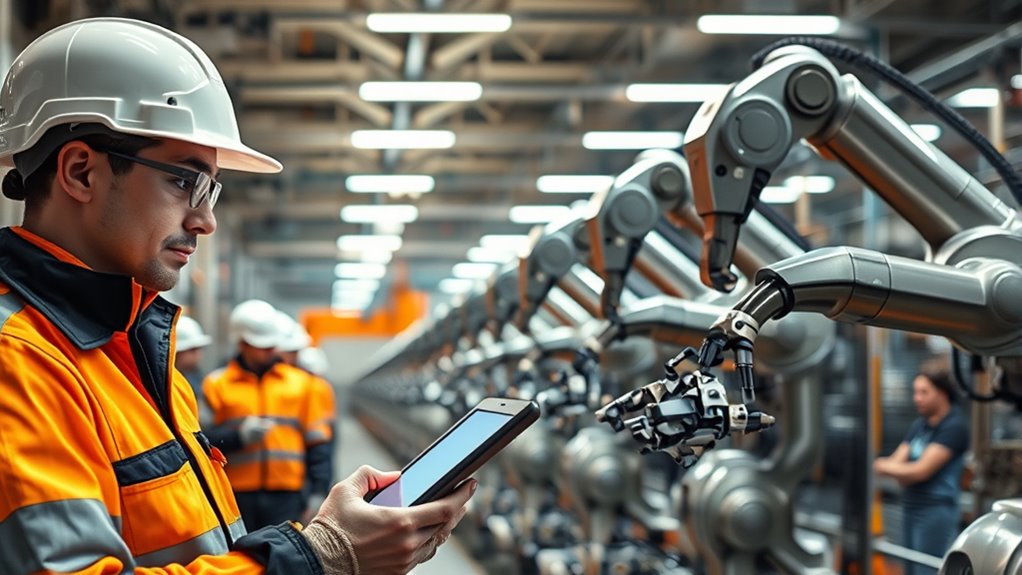

Jobs involving routine tasks in industries like customer service, logistics, retail, and manufacturing are most at risk from AI-driven automation right now. AI can perform repetitive functions more efficiently, leading to fewer human roles in these areas. However, roles requiring creativity, critical thinking, and complex problem-solving are still safer—for now. If you’re curious about how different sectors are affected and what skills are needed for the future, keep exploring this evolving landscape.
Key Takeaways
- Jobs in customer service, logistics, and manufacturing are increasingly vulnerable to automation by AI technologies.
- Routine administrative and retail roles face higher risks of being replaced or streamlined through AI solutions.
- Roles requiring high-level creativity or emotional intelligence are less susceptible but may still experience indirect impacts.
- Workers lacking digital skills or training are more at risk of displacement as AI automates specific tasks.
- New AI-driven roles often demand advanced technical skills, highlighting the importance of upskilling for job security.
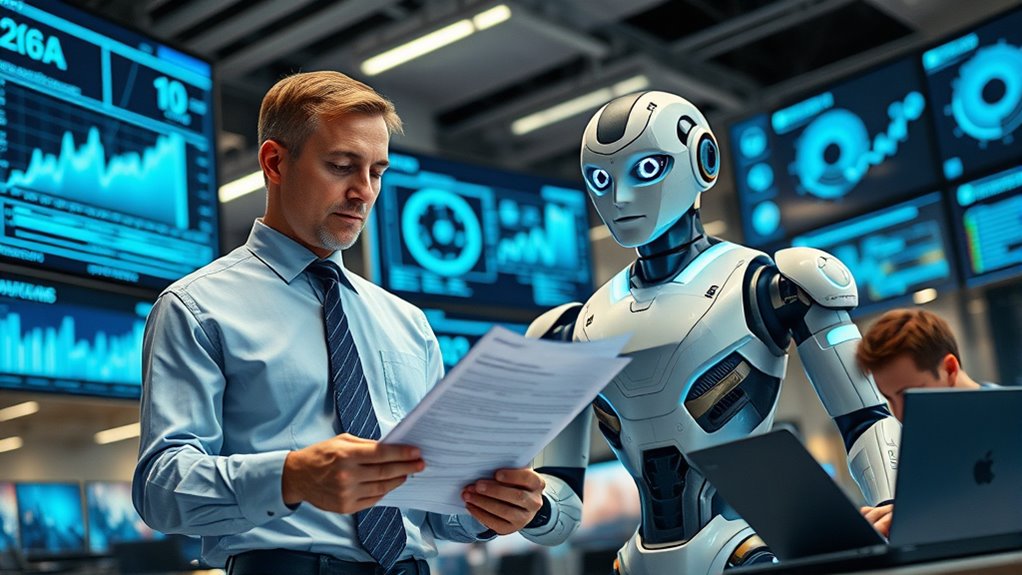
As artificial intelligence continues to advance rapidly, many jobs traditionally performed by humans face increasing automation risks. You might wonder how this shift impacts the workforce and what role AI ethics plays in shaping the future of employment. The conversation around job displacement isn’t just about technology replacing tasks; it’s about ensuring that the changeover is fair and responsible. As AI systems become more capable, especially in fields like customer service, logistics, and even some medical diagnostics, the fear of losing jobs grows. Companies are quick to adopt automation to cut costs and improve efficiency, but this often leaves workers uncertain about their job security. The concern isn’t only about losing work but also about how displaced workers will adapt to new roles or find alternative employment.
AI ethics becomes a vital element in this discussion because it guides responsible AI deployment. Ethical considerations ask questions like: Should AI replace human workers in certain roles? What safeguards should be in place to prevent widespread job displacement? If organizations prioritize profits over people, you risk accelerating unemployment and widening economic inequalities. Conversely, if they embrace AI ethically, they might implement measures such as retraining programs or phased transitions to help employees adapt. The goal is to balance technological progress with social responsibility, ensuring that AI augmentation benefits society rather than just the bottom line. When companies ignore AI ethics, they risk public backlash and long-term damage to their reputation, which can further hinder their growth.
In sectors like manufacturing, automation has already displaced many assembly line jobs, and similar trends are emerging in retail and administrative roles. While some argue that AI creates new opportunities, the reality is that these new roles often require skills that displaced workers may not possess, widening the skills gap. You need to stay informed about how AI impacts your industry and consider upskilling or reskilling to remain competitive. Governments and organizations are beginning to recognize this challenge and are investing in education initiatives to bridge the divide, but progress isn’t fast enough for everyone. As AI continues to evolve, the risk of job displacement will grow unless ethical deployment and proactive policies are prioritized. The future of work depends on how well society manages this shift, ensuring that technological advancements benefit everyone, not just a select few. Additionally, understanding the role of personal development techniques like upskilling and self-reflection can empower workers to adapt more effectively to rapid technological changes.
Frequently Asked Questions
How Soon Will AI Fully Replace Human Workers in Specific Industries?
AI won’t fully replace human workers anytime soon because of complex factors like AI ethics and job security concerns. You’ll see AI assist and automate certain tasks, but complete replacement is unlikely in the near future. Industries will adapt, balancing tech advancements with ethical considerations. Your job security depends on staying adaptable, learning new skills, and understanding how AI can complement your work rather than threaten it.
What Skills Will Remain Essential for Humans Despite Advancing AI?
You’ll find that skills like emotional intelligence and creative problem solving remain essential for humans, even as AI advances. Your ability to understand and connect with others, adapt to complex situations, and think creatively can’t be replaced by machines. These skills enable you to handle nuanced tasks, build relationships, and innovate, making you invaluable in roles that require empathy and original thinking—areas where AI still falls short.
Are There Ethical Concerns About AI Replacing Human Jobs?
You might feel AI replacing jobs is a slippery slope, raising serious ethical concerns. AI bias can unfairly impact job security, especially for marginalized groups. It’s vital to guarantee AI is developed responsibly, with transparency and fairness in mind. Ignoring these concerns risks deepening inequality and eroding trust. As AI advances, it’s your responsibility to push for ethical standards that protect human dignity and promote equitable job opportunities.
How Can Workers Adapt to Ai-Driven Job Market Changes?
To adapt to AI-driven job market changes, you should embrace reskilling initiatives and commit to lifelong learning. Stay updated on new technologies, develop skills that complement AI, and seek out training programs that enhance your expertise. By being proactive, you can position yourself for new opportunities, ensuring your career remains relevant and resilient in a rapidly evolving landscape. Keep learning and stay adaptable to thrive alongside AI advancements.
Which Emerging Jobs Are Less Vulnerable to AI Automation?
Aren’t creative roles and jobs requiring emotional intelligence less likely to be automated? You’ll find that careers in arts, design, counseling, and social work thrive because they rely on human intuition, empathy, and originality. AI struggles to replicate genuine emotional understanding and creative thinking. By focusing on these fields, you can future-proof your career, knowing that your ability to connect and innovate remains irreplaceable in an evolving job market.
Conclusion
As you navigate the shifting job landscape, remember that AI is a double-edged sword. While some roles may fade like whispers in the wind, new opportunities will bloom for those willing to adapt. Don’t let fear be the anchor holding you back—embrace change like a wave carrying you forward. Your resilience and creativity are the compass that will guide you through this storm, turning challenges into stepping stones toward a brighter future.