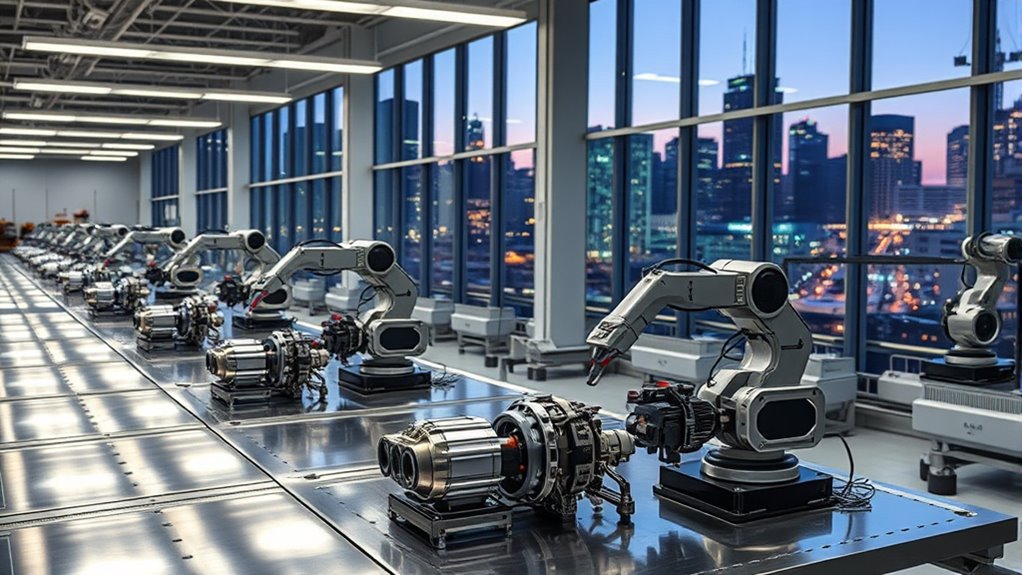
Yes, many factories are returning home and are increasingly supported by automation, especially robots. Robots help cut costs, improve quality, and boost productivity, making domestic manufacturing more competitive. They handle repetitive, dangerous tasks and enable quick adjustments to changing demands. This shift toward reshoring with robotics is strengthening supply chain resilience and ensuring factories stay agile. Keep exploring to discover how automation is transforming the future of manufacturing and reshoring efforts.
Listen free for 30 days with Audible
Thousands of audiobooks and originals — cancel anytime.
As an affiliate, we earn on qualifying purchases.
Key Takeaways
- Many factories are resuming production domestically, increasingly integrating robots to offset rising labor costs.
- Robots facilitate reshoring by enhancing efficiency, safety, and quality control in manufacturing operations.
- Automation reduces supply chain risks, making reshoring more viable amid global disruptions.
- The adoption of robotics supports flexible, scalable manufacturing, attracting companies to bring production back home.
- Overall, the trend shows a growing shift toward reshoring combined with advanced robotic automation for competitive advantage.
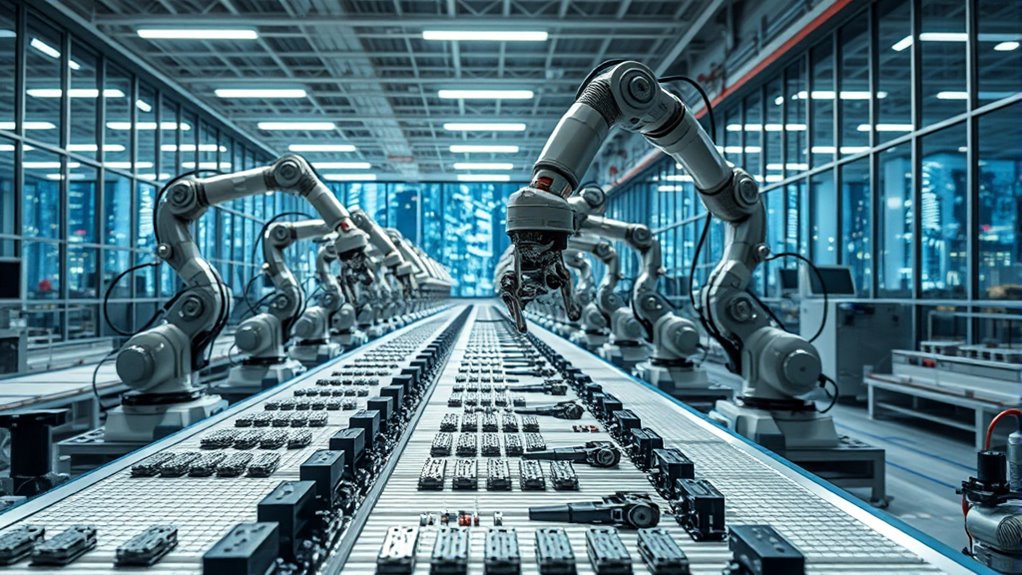
As companies seek to bring manufacturing back home, robots are playing a essential role in reshoring factories. The decision to relocate production isn’t made lightly, and many businesses are turning to automation to ease the transition. One key factor driving this shift is the desire to reduce labor costs. In countries where wages have skyrocketed, maintaining profitability becomes challenging. Robots, however, don’t demand wages or benefits, making them a cost-effective solution for many manufacturers. They can operate around the clock, boosting productivity while cutting down on expenses associated with human labor. This shift toward automation helps companies stay competitive in a global market where price pressures are relentless.
But cost savings aren’t the only motivation behind reshoring with robots. Supply chain risks have become a major concern, especially in recent years. Disruptions caused by geopolitical tensions, pandemics, or natural disasters have shown just how fragile international supply chains can be. Relying heavily on overseas suppliers exposes businesses to delays, shortages, and increased shipping costs. By bringing manufacturing closer to home, companies can better control quality, reduce lead times, and mitigate these risks. Robots are essential here—they enable manufacturers to maintain high standards and flexibility without depending on external suppliers. Automation allows you to quickly adapt to changing demands and minimize downtime, which is critical when the supply chain faces unpredictable disruptions. Moreover, leveraging specialized robotic systems can further optimize production processes and ensure consistent output.
The integration of robots into reshoring efforts also transforms factory operations. You’ll find that automation not only improves efficiency but also enhances safety and consistency. Robots handle repetitive, dangerous tasks, freeing up human workers for more complex and strategic roles. This shift can lead to a more skilled and engaged workforce, which is essential for long-term success. Additionally, modern robotic systems are increasingly flexible and easy to program, allowing you to adapt production lines quickly for different products or market needs. As a result, reshoring factories with robots isn’t just about cutting costs—it’s about creating a resilient, agile manufacturing environment that can better withstand global uncertainties.
Ultimately, the move toward automation in reshoring isn’t just a trend; it’s a strategic response to rising labor costs and supply chain vulnerabilities. Robots provide a way to sustain profitability, improve quality, and enhance responsiveness. If you’re considering bringing production back home, embracing robotics could be the key to overcoming traditional barriers and positioning your factory for future growth. With smarter automation, you gain more control, reduce risks, and stay competitive in an increasingly complex global economy.
industrial robotic arms for manufacturing
As an affiliate, we earn on qualifying purchases.
As an affiliate, we earn on qualifying purchases.
Frequently Asked Questions
What Are the Main Costs Associated With Reshoring Factories With Robots?
The main costs when reshoring factories with robots include significant infrastructure investment to upgrade facilities and implement automation systems. You’ll also face higher initial expenses, especially related to labor costs for skilled workers to operate and maintain robots. While these costs can be substantial upfront, they often lead to long-term savings through increased efficiency and reduced labor expenses, making reshoring a strategic move for many manufacturers.
How Do Robot-Powered Reshored Factories Impact Local Communities?
Robot-powered reshored factories can boost community well-being by creating new local employment opportunities in tech and maintenance roles. However, automation might reduce traditional factory jobs, which can challenge local economies. You might see improved infrastructure and increased local spending, but it’s essential to balance automation with initiatives that support community growth. Overall, these factories can foster economic development while emphasizing the importance of inclusive employment strategies.
Are There Specific Industries More Likely to Reshore With Automation?
You’ll notice that industries like electronics, automotive, and pharmaceuticals are more likely to reshore with automation. These sectors benefit from industry-specific automation that boosts efficiency and quality. Regional reshoring trends also influence this shift, as companies seek closer proximity to markets and skilled labor. By adopting automation tailored to their industry, these sectors reduce costs and improve competitiveness, making reshoring a strategic move for their growth and stability.
How Does Reshoring With Robots Affect Global Supply Chain Dynamics?
Imagine a shifting puzzle, with reshoring robots reshaping global supply chains. You’ll see supply chains tighten as automation reduces reliance on distant factories, influencing the labor market locally. Geopolitical influence plays a role too, as countries aim for self-sufficiency. This dance of technology and politics creates a new rhythm, making supply chains more resilient but also more complex, like a web woven tighter with every robotic addition.
What Skills Are Required for Workers in Automated Reshored Factories?
You need strong technological literacy to operate and troubleshoot advanced automation systems effectively. Additionally, teamwork skills are essential, as working alongside robots and other workers requires clear communication and collaboration. You should also be adaptable, willing to learn new technologies continuously, and able to problem-solve quickly. These skills guarantee you stay efficient and valuable in automated reshored factories, helping to meet production goals and maintain safety standards.
automated factory robotic systems
As an affiliate, we earn on qualifying purchases.
As an affiliate, we earn on qualifying purchases.
Conclusion
So, as factories consider bringing jobs back home, robots seem ready to lead the way. But are they enough to truly reshape manufacturing? The answers aren’t clear yet, and the future remains uncertain. Will automation bring the stability and growth you hope for, or will unexpected challenges emerge? One thing’s certain: the next chapter in reshoring could change everything—if you stay tuned. The real story is just beginning.
robotic welding and assembly robots
As an affiliate, we earn on qualifying purchases.
As an affiliate, we earn on qualifying purchases.
collaborative robots for factories
As an affiliate, we earn on qualifying purchases.
As an affiliate, we earn on qualifying purchases.
NFL season / tailgating Picks
team gear
As an affiliate, we earn on qualifying purchases.