
Coding bootcamps can help you stay competitive as automation advances by offering practical, industry-relevant skills quickly and flexibly. They enable you to upgrade your expertise, develop a strong portfolio, and adapt to changing job market demands. Plus, their focus on real-world projects and remote learning prepares you for evolving industry needs. If you want to discover how these programs can actually help protect your career, you’ll find useful insights ahead.
Key Takeaways
- Coding bootcamps equip individuals with adaptable, industry-relevant skills that can help workers transition into new roles amid automation.
- They promote continuous learning, enabling workers to stay updated and relevant as technology evolves and automates tasks.
- Practical, project-based training prepares learners for real-world scenarios, increasing job resilience in a changing job market.
- Bootcamps can accelerate skill acquisition, allowing displaced workers to quickly re-enter the workforce or shift to emerging tech fields.
- However, long-term job security still depends on ongoing learning, networking, and adapting to industry changes beyond initial bootcamp training.
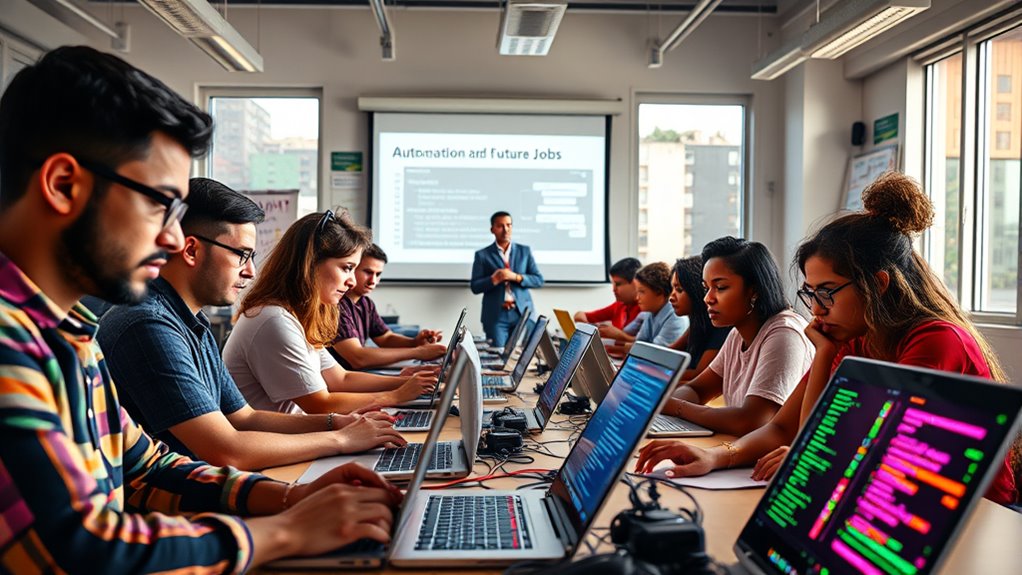
Are coding bootcamps worth the investment when it comes to landing a tech job? It’s a question many aspiring developers ask, especially with the rise of online certifications and the increasing popularity of remote learning. You might wonder if these shorter, intensive programs can truly prepare you for a competitive job market or if they’re just a passing trend. The truth is, coding bootcamps can be a smart choice if you approach them thoughtfully, but it’s essential to understand what they offer and how they fit into your career goals.
One of the biggest advantages of coding bootcamps is their flexibility. Because many programs are available through online certifications, you can learn at your own pace without disrupting your current job or personal commitments. Remote learning allows you to access a wide range of courses from reputable providers, often with mentorship and project-based curricula that mirror real-world scenarios. This accessibility means you’re not limited by geographic location or rigid schedules, making it easier to acquire skills quickly and efficiently. Plus, many bootcamps emphasize practical skills over theoretical knowledge, which aligns well with the needs of tech companies looking for candidates who can hit the ground running.
Coding bootcamps offer flexible, accessible, practical learning from reputable providers, ideal for quick skill acquisition without disrupting your schedule.
Another point to contemplate is the quality of instruction and resources available through online certifications. Many bootcamps partner with industry professionals, ensuring the curriculum is relevant and up-to-date with current technologies. They often include hands-on projects, collaborative work, and even career support services that help you build a portfolio and prepare for interviews. With remote learning, you’re also developing skills in self-discipline and time management—traits that are highly valued in the tech industry. And because these programs are designed for fast-paced learning, you can often complete them in a matter of months, giving you a quicker route to employment compared to traditional education. Additionally, some programs incorporate support hours similar to those offered by entertainment and parks venues, which can enhance your learning experience through accessible guidance and assistance. However, it’s important to recognize that a bootcamp alone isn’t a guarantee of landing a job. Success depends on your dedication, ability to network, and how well you leverage the skills you’ve gained. Many employers now recognize online certifications and bootcamp credentials, especially when backed by real-world projects and a strong portfolio. This shift has helped demystify the idea that only a four-year degree can lead to a tech career. Instead, continuous learning through remote platforms and targeted certifications can keep you competitive in an ever-evolving industry.
Frequently Asked Questions
How Long Do Coding Bootcamps Typically Take to Complete?
Coding bootcamps typically take about 8 to 12 weeks to complete, depending on the program. You’ll benefit from curriculum customization to focus on skills that match your goals, and many bootcamps offer certification recognition to boost your resume. During this time, you’ll learn practical coding skills quickly, preparing you for tech roles. Keep in mind that intensive dedication is key to completing the program successfully.
What Are the Costs Associated With Attending a Coding Bootcamp?
On average, coding bootcamps cost around $13,000, but tuition expenses vary widely. You should also budget for living costs during training, which can add up considerably. While some programs offer scholarships or income share agreements, be prepared for upfront payments or financing options. Keep in mind that investing in your skills can pay off, but understanding the total costs helps you plan better for your tech career shift.
Do Coding Bootcamps Offer Job Placement Assistance?
Yes, coding bootcamps often offer job placement assistance. You’ll benefit from job placement statistics that highlight their success rates and employer partnerships, which connect you directly with potential employers. These programs actively work to prepare you for the job market, providing career coaching and networking opportunities. By leveraging these resources, you improve your chances of landing a tech role quickly after graduation.
Are Coding Bootcamps Suitable for Career Changers With No Tech Background?
Coding bootcamps can be suitable for career changers with no tech background, but you should be prepared for transferability challenges and foundational knowledge gaps. These programs are intensive and focus on practical skills, helping you quickly adapt to new roles. However, you’ll need to put in extra effort to fill gaps in your understanding and demonstrate your ability to transfer your existing skills to the tech industry.
What Skills Are Most in Demand From Coding Bootcamp Graduates?
Imagine you’re a tech pioneer in a sci-fi novel—your skills shape the future. As a coding bootcamp graduate, you’ll find most in demand are skills in emerging technologies like AI, blockchain, and cloud computing. But don’t forget soft skills like teamwork, communication, and problem-solving, which set you apart. Staying adaptable and continuously learning keeps you ahead in this fast-evolving landscape, ensuring your career remains resilient amid automation.
Conclusion
So, while coding bootcamps might not turn back the tide of automation completely, they can certainly help you stay a step ahead. Think of them as a gentle nudge rather than a magic fix—arming you with fresh skills to navigate the shifting landscape. Embrace the learning journey, and you’ll find yourself better prepared for whatever the future holds. After all, adaptability is your best ally in this ever-evolving world of work.