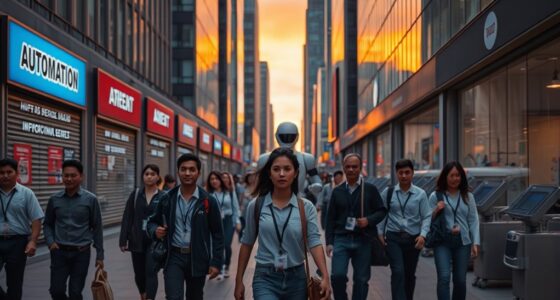
The future of driving jobs is rapidly changing as AI and autonomous fleets reshape transport and logistics industries. Driverless vehicles will soon handle deliveries, daily commutes, and fleet management, reducing traditional driving roles. While some jobs may decline, new opportunities in tech support, vehicle maintenance, and oversight will emerge. Understanding these shifts helps you stay prepared for industry changes. Keep exploring to discover how you can adapt and thrive in this evolving landscape.
Key Takeaways
- Autonomous fleets are transforming transportation, reducing the need for traditional driving roles in logistics and delivery.
- AI-driven systems enable 24/7 operations, increasing efficiency but shifting job focus toward fleet management and tech support.
- Regulatory, safety, and public acceptance challenges influence the pace and nature of autonomous vehicle adoption.
- New opportunities will emerge in AI oversight, vehicle maintenance, and infrastructure coordination, replacing some conventional driving jobs.
- Skill development in technology and adaptability are essential for workers to thrive in the evolving transport and logistics industry.

As technology continues to evolve, the future of driving jobs is shifting rapidly. Autonomous fleets are becoming more common, transforming how goods and people move across cities and highways. Instead of relying solely on human drivers, companies are now deploying large groups of driverless vehicles that operate seamlessly without direct human control. These autonomous fleets are designed to optimize routes, reduce costs, and improve safety, making traditional driving roles less necessary. As a result, many drivers might find their jobs changing or shrinking as these self-driving systems take on more responsibilities.
Autonomous fleets are transforming transportation, making traditional driving roles less necessary and reshaping the future of driving jobs.
One of the most visible advancements is driverless delivery, which is revolutionizing the logistics industry. With driverless delivery vehicles, companies can send out packages, food, and even groceries without human drivers behind the wheel. These vehicles use sophisticated AI systems that navigate traffic, avoid obstacles, and communicate with infrastructure to ensure quick and safe deliveries. For you, this could mean a future where your daily commute or errands are handled by intelligent, autonomous vehicles, reducing the need for personal driving time. It also means that delivery jobs, which currently rely heavily on human drivers, might evolve into roles focused more on overseeing fleets or managing the technology rather than physically delivering items.
However, this shift isn’t just about replacing jobs; it’s about reshaping the entire transportation ecosystem. Autonomous fleets can operate 24/7, increasing efficiency and reducing delays caused by human fatigue or errors. For drivers, this could mean fewer opportunities for traditional truck or taxi jobs, but it might also open new roles in tech support, fleet management, or vehicle maintenance. As driverless delivery becomes more widespread, you might see a rise in positions related to monitoring autonomous vehicles or developing new AI systems that improve their performance.
The shift to autonomous fleets and driverless delivery isn’t without challenges. Regulatory hurdles, safety concerns, and public acceptance all play a role in how quickly these technologies are adopted. For you, understanding these changes means recognizing that driving jobs will likely become more specialized. Instead of hands-on driving, future roles may focus on overseeing AI systems, ensuring safety protocols, or maintaining autonomous vehicles. While some traditional driving jobs may decline, new opportunities will emerge for those willing to adapt.
In essence, the future of driving jobs is becoming more intertwined with AI and automation. Autonomous fleets and driverless delivery are just the beginning of a broader shift towards smarter, more efficient transportation systems. If you’re in the industry, staying informed and developing skills related to these technologies will be key to navigating the evolving landscape. Additionally, understanding emotional support strategies can help workers manage the stress associated with rapid technological change and job transitions.
Frequently Asked Questions
How Will AI Impact Driver Employment Rates Long-Term?
AI will likely reduce driver employment long-term by automating tasks like fleet management and traffic optimization, making operations more efficient. You might see fewer driving jobs as autonomous vehicles take over routes, but new roles could emerge in overseeing and maintaining these systems. While some drivers may face job loss, others could shift toward tech-focused positions, emphasizing AI integration in logistics and transport industries.
What New Skills Will Drivers Need in an Ai-Driven Industry?
Imagine you’re a skilled pilot steering a changing sky; now, you’ll need digital literacy to interpret new tech tools and technical adaptability to stay afloat. In an AI-driven industry, drivers like you must learn to work alongside automation, troubleshoot software, and understand data insights. These skills will help you remain valuable, ensuring you adapt smoothly and continue to steer your career through the evolving landscape of transport and logistics.
Are There Regulatory Hurdles for Autonomous Vehicles in Different Countries?
Yes, there are regulatory hurdles for autonomous vehicles in different countries. You need to guarantee regulatory compliance by understanding each region’s legal frameworks, which can vary widely. Some countries have strict rules, requiring extensive testing and certification, while others are more open. Staying informed about these regulations helps you navigate the legal landscape effectively, ensuring your autonomous vehicles meet all safety and operational standards across borders.
How Will AI Affect Wages and Working Conditions for Drivers?
AI will likely impact your wages and working conditions by shifting driver roles. You might need to undergo new driver training to adapt to AI-assisted systems, which could influence your pay negotiations. As automation increases, your wages may stagnate or decline, especially if companies prioritize cost-cutting. However, staying updated with AI technologies and strengthening your skills could help you negotiate better wages and maintain favorable working conditions.
What Cybersecurity Risks Are Associated With AI in Transport Systems?
You face cybersecurity risks like vulnerabilities in transport systems, which hackers could exploit to cause accidents or disruption. Data privacy is also a concern, as sensitive information from vehicles and passengers might be accessed or stolen. To stay protected, guarantee robust cybersecurity measures are in place, including encryption and regular updates. Being aware of these risks helps you safeguard both your data and the safety of AI-driven transport systems.
Conclusion
As AI transforms transport and logistics, you might think driving jobs will vanish entirely. But in reality, automation won’t erase all opportunities; it’ll reshape them. While some roles fade into history, new positions emerge—focused on oversight, maintenance, and AI management. So, as you face this shifting landscape, remember that progress often brings both loss and growth. Embrace change not just as an end, but as a beginning—where human ingenuity still drives the future forward.